Why Commercial AC Maintenance Contracts Save Phoenix Businesses More Than They Cost
Commercial HVAC repair is a constant line item for Phoenix businesses because the Valley heat is relentless and rooftop packaged units run for long hours almost every day of the year. Smart operators across Arcadia, Biltmore, Camelback East, Ahwatukee, Desert Ridge, North Phoenix, and the Sky Harbor corridor choose a scheduled commercial AC maintenance contract because it costs less than the emergency calls, lost productivity, and energy waste that hit when systems are left to run until they fail. In Phoenix’s climate zone 2B, maintenance is not a nice-to-have. It is the only reliable way to keep cooling capacity, reduce utility spend during peak APS and SRP rate windows, and extend the life of compressors, blower motors, and heat exchangers on rooftops that sit in 130 to 150 degree afternoon sun.
Day and Night Air Conditioning, Heating and Plumbing has maintained Phoenix commercial HVAC systems since 1978 from its base near I-10 and the Loop 202 in the 85040 zip code. The technicians see the same failure patterns each summer on packaged rooftop units across warehouses south of Phoenix Sky Harbor International Airport, restaurants along Indian School Road, medical offices near Camelback Mountain, and retail spaces off Loop 101 in Desert Ridge. The contract customers have fewer emergency calls, smoother operations during monsoon season, and lower year-round energy bills than non-contract customers. The difference is measurable, not theoretical.
Why Phoenix commercial systems face unusual stress
Phoenix is a hot-dry climate with ASHRAE 99 percent design cooling temperatures between 110 and 117 degrees depending on neighborhood elevation. That is the baseline. On a west-facing roof in Maryvale or Sunnyslope, the condensing section of a rooftop unit sits in a microclimate that is often 130 to 140 degrees during peak afternoon hours in June, July, and August. That ambient temperature pushes key electrical parts, such as the run capacitor and contactor, toward the top of their rated temperature range for months at a time. The run capacitor is the cylindrical component that stores and releases an energy pulse to start the compressor and the condenser fan motor at every cycle. High ambient heat shortens its life. It is the most common emergency replacement part Day and Night installs during summer across 85016, 85018, and 85044.
From June through September, monsoon dust events coat condenser coils with caliche fines. A condenser coil is the heat-rejecting radiator around the outdoor section. When those fins clog, heat transfer efficiency drops and head pressure rises. That reduces capacity 15 to 25 percent until the coils are cleaned, which forces longer runtimes and spikes demand charges for businesses on time-of-use demand rates. This single factor explains many “AC not keeping up” calls during late July, even when the equipment is mechanically sound. Commercial HVAC repair calls often trace back to a dirty coil that routine contract service would have prevented.
During monsoon, humidity can also surge. Restaurants along the Camelback Corridor and fitness studios near Encanto Park often report sticky indoor conditions and musty odors. That is often a combination of low airflow from a fouled blower wheel and insufficient condensate drainage. A maintenance contract includes blower inspection and cleaning and confirmation that the condensate drain line is clear and pitched correctly to the roof drain. That prevents water overflow into ceilings and eliminates nuisance float switch trips that shut down cooling during the dinner rush.
What a real commercial AC maintenance contract covers in Phoenix
Not all maintenance is equal. Phoenix rooftop packaged units and split systems need a sequence of tasks that match the desert environment, the 2026 refrigerant and efficiency standards, and the operational profile of each building. A good contract is built around the following work at least twice per year, with coil cleaning scheduled around monsoon season:
- Condenser and evaporator coil cleaning with water and coil-safe cleaner to restore heat transfer and static pressure Electrical testing, including run capacitor capacitance reading, contactor inspection for pitting or welding, tightening of lugs, and amp draw verification on the compressor and blower motor Refrigerant charge evaluation using superheat and subcool measurements to verify proper TXV valve operation and prevent low charge compressor overheating Airflow measurement, belt tension check, bearing lubrication, and blower wheel cleaning to maintain design CFM and reduce energy use Economizer and controls calibration, including outside air sensor validation, damper movement test, and thermostat or building automation setpoint audit
Each step has a cash impact. Clean coils lower head pressure and save energy. Properly charged circuits prevent compressor overheat trip and winding damage. A solid contactor prevents nuisance shutdowns from arcing. Calibrated economizers on retail buildings along 7th Street can bring in cool morning air during shoulder seasons and cut compressor run time, which drops demand charges. The result is fewer commercial HVAC repair emergencies and longer equipment life.
How maintenance contracts reduce emergencies and long-term costs
Emergency cooling calls cost more than a scheduled visit. They also happen during the worst time for the business. Anyone who has managed a restaurant near Phoenix Sky Harbor during a Friday dinner hour knows how fast indoor temperatures climb when a rooftop unit shuts off at 5 pm in July. Maintenance contracts intercept the most common causes of those shutdowns before they happen. Day and Night data from Phoenix contract customers show a sharp drop in mid-summer no-cool dispatches compared to non-contract sites with similar buildings and equipment ages.
Consider four high-cost failures that regular service helps avoid. commercial HVAC solutions First, compressor failure from chronic low refrigerant charge. Low charge forces the compressor to run hot. Windings and insulation degrade. A contract that includes documented superheat and subcool measurements catches the leak early. A refrigerant leak often appears at the TXV valve or the evaporator coil on older units. Early repair saves a compressor that would otherwise die under August load. Second, circuit board and contactor failures from heat and power surges. Summer storms across South Mountain Park create stops and starts on the grid that stress electronics. A maintenance contract includes inspection and replacement of parts that show carbon tracking or pitting, and can include surge protection to cut risk further.
Third, blower motor burnout from high static pressure. Dust accumulates on the blower wheel and return side. The motor works harder and draws more amps. The heat adds up. A contract includes cleaning and filter replacement with the right MERV rating that balances air quality and static pressure. Fourth, chronic condensate management failures. A clogged drain pan or line trips a float switch and shuts the unit down. In medical suites near Phoenix Children’s Hospital, even a few hours without cooling is a major problem. Scheduled drain cleaning and slope corrections stop these interruptions.
In Phoenix, downtime has an extra cost. Dry goods stores off US 60 can survive a few hours without cooling. Salons along Central Avenue, commercial kitchens on Thomas Road, and data closet spaces in office buildings around 24th Street cannot. Cooling protects revenue and inventory. Maintenance contracts reduce risk and they produce fewer last-minute service calls, which means more reliable scheduling for building managers.
Energy use and SEER2 reality on Phoenix rooftops
The 2026 SEER2 minimums for the Southwest region set the floor for new packaged units at 14.3 SEER2 and for split systems under 45,000 BTU at 14.3 SEER2 with an 11.7 EER2 requirement. Many older rooftop units in Phoenix that still run today were installed at 10 SEER or less. Replacing every low-SEER unit is not always possible in one budget cycle. Maintenance contracts preserve whatever efficiency exists by removing the two biggest real-world efficiency killers in Phoenix: coil fouling and improper refrigerant charge.
Coil fouling from haboobs during June through September reduces capacity and raises energy use. It is common to see units that appear healthy on paper consume 15 to 25 percent more kWh during monsoon months because the condenser fins are packed with caliche dust. Cleaning restores seasonal performance. Charge problems matter as well. A 10 percent undercharge can cut capacity noticeably and send EER2 down during peak afternoon load. Contract technicians record superheat and subcool values, note drift over time, and schedule leak tests before the failure forces a midweek shutdown at 3 pm.
For owners planning upgrades, maintenance documentation also supports incentives. APS and SRP offer HVAC rebates that change by program year and equipment type. Residential incentives are widely known. Commercial customers should still ask about current SRP or APS business incentives for high-efficiency packaged units and controls. Day and Night helps document performance, filter sizes, and model data so facility teams can apply for available programs when they replace a failing RTU along Loop 101 or Loop 202.
R-410A to R-454B transition and what it means for commercial buildings
The federal R-454B refrigerant transition takes effect January 1, 2026 under EPA SNAP Rule 24. It ends new R-410A equipment manufacturing. R-454B is classed as A2L, which means mildly flammable, and has a global warming potential of 466 compared to R-410A at 2,088. Phoenix building owners need to plan for service on mixed fleets while the market transitions. Existing R-410A packaged units and split systems can still be serviced with recovered R-410A. Supply will get tighter over the next several years as inventory works through the pipeline. That pushes up price risk on major repair decisions for late-life R-410A units.
Maintenance contracts help owners manage this phase. Technicians trained on R-454B safety, leak detection, and indoor concentration thresholds must handle new installs and service. Contract providers who are already trained and equipped can advise when a leaking R-410A evaporator coil near its service-life end should be replaced with a new R-454B-compliant unit rather than repaired, especially on units that are also below the 2026 SEER2 minimums. For multi-tenant buildings from Encanto to Paradise Valley Village, this guidance avoids throwing money at aging equipment with rising refrigerant costs.
A2L refrigerants require updated tools, ventilation awareness, and technician certification. Day and Night’s EPA Section 608 certified crews have completed R-454B transition training to handle these changes. A maintenance contract keeps the building on the right side of evolving standards while avoiding surprise costs from last-minute refrigerant sourcing.
Indoor air quality matters in monsoon season
Phoenix is usually very dry, which masks indoor air quality problems until July. Monsoon humidity enters through propped-open doors, leaky economizers, and aging ductwork seams. In Biltmore and Arcadia mid-century commercial structures, original ductwork can leak 30 to 40 percent of supply air into unconditioned attic space. That leakage wastes energy and reduces ventilation control. A maintenance contract includes duct inspections, damper position checks, and review of filter MERV ratings. MERV 11 or MERV 13 filters improve particle capture but can raise static pressure if the fan and ductwork are not sized for it. Contract technicians balance air quality goals and airflow limits to avoid blower overheating and short cycling. They also clear and sanitize condensate pans to prevent microbial growth during humid weeks when coils stay wet longer.
Restaurants along Roosevelt Row and coffee shops on 7th Avenue know that odors and humidity complaints ruin the customer experience. Gyms in North Phoenix know that persistent humidity raises the load on dehumidifiers and the main cooling stages. Maintenance is the fastest way to cut these problems without a full system overhaul.
The true cost of running to failure in Maricopa County
Many businesses try to save on budget by deferring maintenance. In Phoenix, that decision usually backfires within a season or two. The hard costs stack up quickly: emergency diagnostic fees during peak heat, after-hours dispatches when units fail at closing time, and expensive compressor or blower motor replacements that could have been avoided with charge correction, bearing lubrication, or a $20 contactor swap. The soft costs hit just as hard: lost sales from a warm dining room in Ahwatukee, tenant dissatisfaction in a Camelback East mid-rise, or product loss in a small warehouse near SR 51 where heat-sensitive goods cannot sit in a 90-degree space for long.
There is also the load on the local electrical grid. Phoenix businesses pay demand charges that reflect the highest 15-minute usage window in a billing cycle. Dirty coils and low charge drive higher peak draw as systems run harder to hold setpoint. Well-maintained systems at a car dealership off I-17 will pull less peak power than neglected units at the same location. The contract cost often pencils out in energy savings alone for heavy-use buildings.
What Day and Night technicians actually do on a contract visit
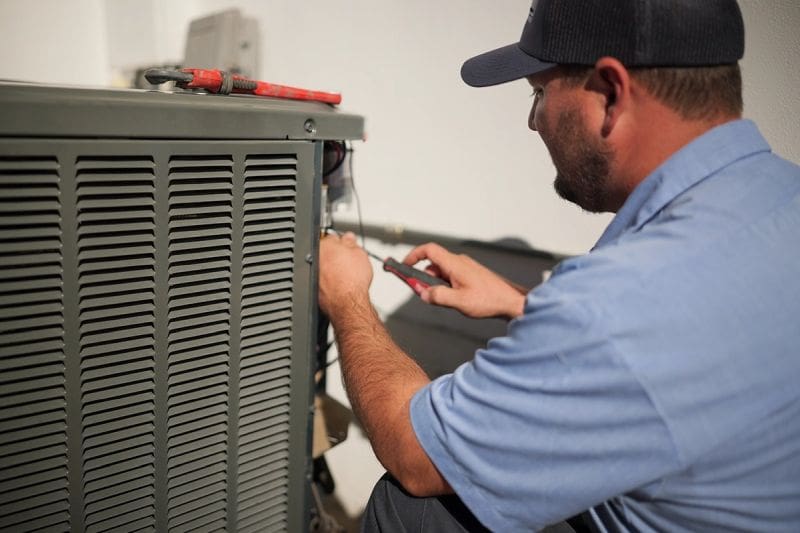
Commercial HVAC repair technicians working a Phoenix contract visit do more than change filters. On an RTU over a retail space on Bell Road, they begin with a safe lockout-tagout, then remove panels for visual inspection. They confirm that the condenser coil is visibly free of caliche blockage. If fouled, they clean it fully, not just rinse the surface. They inspect wiring, verify that the contactor points are not pitted or welded, and test the run capacitor with a capacitance meter against nameplate microfarads. If readings are out of spec, they replace it. They check compressor and fan motor amp draws against rated load amps. They record superheat and subcool values, compare to the last maintenance logbook entry, and flag drift that indicates a small refrigerant leak.
They move to airflow. They confirm belt condition and tension, lubricate bearings where applicable, and clean the blower wheel if dust buildup is visible on the vanes. They check filter fit and MERV rating to keep static pressure within the fan curve. They move to the economizer. They verify sensor accuracy, test damper travel, and confirm the outdoor air minimum position for ventilation. They test the condensate drain pan and line by pouring water to observe flow to the roof drain. They flush as needed. They inspect the control board, check for any fault codes, and validate thermostat or building automation setpoints for business hours, nights, and weekends.
On heat pump units, they also test the reversing valve, which is the component that switches refrigerant flow for heating and cooling mode. A sticky reversing valve can cause poor cooling complaints in spring. On gas heat sections, they visually inspect the heat exchanger and ignition assembly, because most Phoenix commercial systems are heat pumps or gas-electric package units that still need winter safety checks. If they see any signs of a heat exchanger crack, they red tag per safety protocol and propose repair or replacement.
Documentation that helps property managers and owners
Maintenance contracts generate records that matter. Property managers in Encanto and Paradise Valley Village need documentation of filter changes, coil cleaning, and parts replacement for lease compliance and warranty requirements. Restaurants must show local health inspectors that rooftop units are cleaned and maintained. Owners need trended data to make decisions about replacing an aging 10 SEER unit with a modern 15+ SEER2 package at the right time. Good reports track temperatures, pressures, superheat, subcool, amp draws, and setpoints every quarter or semiannual visit. That is how the decision to replace is made on facts, not guesswork.
Documentation matters for incentives and taxes as well. While APS Cool Rewards and SRP’s well-known HVAC rebates are often promoted for residences, commercial programs are available in some cycles. Contract documentation, photos, and model numbers speed those applications. For mixed-use properties and small office buildings across 85032, 85050, and 85054, the combination of maintenance logs and replacement quotes helps boards and owners schedule capital projects without emergency pressure.
Why contracts save more than they cost in Phoenix
A maintenance contract in Phoenix cuts the three biggest cost drivers: emergency commercial HVAC repair calls, energy waste during demand billing windows, and early equipment failure. The math is straightforward. Two coil cleanings per year and a full operational check prevent the late July break that takes a rooftop unit offline for a day. That averted failure can save a business on an after-hours service, lost sales, and a shorted compressor that might have run another three seasons. Every corrected charge and cleaned coil lowers head pressure and demand draw. Every belt and bearing service reduces amp draw and heat on the motor windings, which lengthens service life.
There is a shareable data point that explains the Valley’s unique risk profile. During monsoon season, Day and Night has documented 15 to 25 percent cooling capacity loss on rooftop packaged units across Phoenix zip codes after haboob dust events because condenser fins are packed with caliche fines. The units run longer, drift off setpoint in late afternoon, and draw more kW demand until the coils are cleaned. A simple coil wash and fin straightening brings that capacity back. Contract schedules put that cleaning on the calendar before business-critical weeks, rather than commercial HVAC after capacity losses and comfort complaints pile up.
How contracts adapt to building types along Phoenix corridors
Every building type needs a slightly different maintenance routine. Retail spaces along Camelback Road usually depend on packaged RTUs with economizers. They need spring and fall economizer calibration and regular damper inspection because propped-open doors change pressure relationships at the front of the store. Restaurants along 24th Street and Thomas Road have grease and humidity loads that clog filters and blower wheels faster. They need more frequent filter changes and drain pan checks. Medical and dental suites near Phoenix Sky Harbor and along SR 143 need better filtration, usually MERV 13, which increases static pressure. They need closer review of fan performance and duct leakage. Warehouses south of I-10 run large tonnage units for long hours. They need attention on contactors, capacitors, and condenser coil condition to protect compressors during 3 pm peak loads.
Historic buildings in Encanto and older infill strips in Biltmore and Arcadia often still have original or minimally upgraded ductwork. Leak rates can be 30 to 40 percent of supply. The contract should include regular duct sealing inspections and, when needed, proposals for targeted duct replacement to recover lost supply air that the business is paying to cool but not receiving at the registers.
Why an integrated HVAC and plumbing contractor matters for commercial sites
Commercial sites have HVAC and plumbing infrastructure that interact. Condensate drains connect to roof drains or interior lines. Clogged roof drains during monsoon storms can back up and flood mechanical rooms or ceilings. A contractor that performs both mechanical and plumbing work resolves these cross-trade problems on one visit. Day and Night holds Arizona ROC C-39 air conditioning and refrigeration and C-37 plumbing licenses, which allows the team to correct a condensate drain issue and a roof drain issue within one service window. That reduces downtime and eliminates the finger-pointing that often happens when two firms are required for one system.
Plumbing integration matters for water heaters too. Restaurants and salons with heat pump water heaters or gas-fired units have venting and makeup air that affect indoor conditions. Maintenance scheduling can align HVAC and water heater service so both systems run as designed during peak summer. Phoenix’s Central Arizona Project water hardness measures 12 to 18 grains per gallon with 200 to 300 ppm calcium carbonate equivalent. That scales tankless heat exchangers if annual descaling is skipped. For mixed-use buildings with shared mechanical rooms, an integrated contractor keeps both the cooling and the hot water side on a proper service schedule.
Compliance and safety on Phoenix rooftops
Rooftop work across Phoenix requires trained, certified technicians. A2L refrigerants such as R-454B bring new handling rules. Lifts, fall protection, and lockout-tagout are standard. Commercial managers must also consider combustion safety on packaged gas-electric units used during winter. A heat exchanger crack on a rooftop unit over a daycare near South Mountain must be taken seriously even if the heating season is short. Trained technicians test for carbon monoxide risk and document results. Arizona’s licensing framework helps owners choose legitimate providers. Day and Night is licensed, bonded, and insured, with technicians who hold EPA Section 608 certification and R-454B transition training. They follow ACCA maintenance checklists and record data for each visit.
What a Phoenix maintenance contract typically includes by season
Seasonal timing makes sense for Phoenix because the equipment faces different stressors in spring, summer, fall, and winter. Spring visits focus on coil cleaning, economizer tune-ups, and electrical checks before heat season. Mid-summer spot checks keep coils and drains clear during haboobs. Fall visits set up for the shoulder season and correct the wear from summer load. Winter visits on gas-electric packages confirm ignition systems are safe, filter status is correct, and controls are ready for the cooling ramp in March. Contract customers near Desert Ridge off Loop 101 prefer a spring and fall plan with optional mid-summer and winter checks based on use. Restaurants and 24-hour operations near I-17 often choose quarterly service because runtimes are long and failure risk is higher.
How maintenance supports smart replacement decisions
Even with a good maintenance program, every rooftop unit has a service life. Phoenix heat accelerates aging. A maintained RTU still usually reaches end-of-life before the same unit in a milder climate. Maintenance records let owners decide when to replace and what to replace with. For example, a 12-year-old 10 SEER package on a retail strip in Maryvale that has rising compressor amps, frequent contactor wear, and sagging coil fins is a candidate for replacement with a 15+ SEER2 package after the 2026 standard shift. Technicians can also confirm roof curb dimensions and electrical service capacity before a crane day is scheduled. For heat pump units, HSPF2 ratings matter for the light winter heating Phoenix needs. Documentation avoids guessing and fits the crane pick into a tight schedule without surprises on installation day.
How commercial HVAC repair integrates with maintenance under one provider
Contracts do not eliminate every emergency. They drastically reduce them. When a problem does break through, the same team that has serviced the unit can perform the commercial HVAC repair quickly because the history is known, the parts are often on the truck based on the contract inventory plan, and the rooftop location and access are familiar. That reduces time on site, gets the space back to setpoint sooner, and keeps tenants and customers comfortable. It also holds down costs because accurate diagnosis is faster with a known system history.
A note on filter strategy and static pressure
Many Phoenix businesses upgraded to higher MERV filters during and after 2020. MERV 13 captures fine particles but adds resistance to airflow. In older duct systems or units without variable speed fans, that resistance raises static pressure. High static means the blower works harder and can overheat. The right contract aligns filter choice with blower capability. Sometimes that means a dual-filter strategy, such as MERV 8 prefilters with MERV 11 final filters, if the fan and duct paths can handle it. Sometimes it means MERV 11 is the ceiling for a given unit. The goal is clean air that the system can move without damaging motors or starving the evaporator coil of air, which would cause icing and poor cooling.
Real Phoenix examples from the field
A Maryvale retail strip along 51st Avenue with three 12.5-ton RTUs saw summer afternoon space temperatures creep above 80 degrees every July. The coils looked clean from above. A panel removal showed fins packed with caliche two inches into the coil depth. Post-cleaning head pressure dropped by over 50 psi and discharge air dropped three degrees at the registers. Energy use for the peak month decreased by a measurable margin on the next utility bill.
An Arcadia restaurant on 44th Street had recurring float switch trips that shut the units off during dinner service. The cause was a flat section of condensate line across a roof seam that pooled water. The contract visit corrected the slope, secured the line supports, and flushed the trap. No trips the remainder of the season. A North Phoenix fitness studio off Greenway Road had humidity complaints during monsoon. The economizer damper was stuck open 15 percent. A pivot bushing had cracked. Replacement and recalibration fixed the problem in one visit. These are standard Valley issues that contract service addresses before they turn into outages.
Who benefits most from contracts in Phoenix
Every business with cooling benefits, but some see larger returns. Food service, salons, fitness, and medical suites carry the highest risk from downtime. Multi-tenant office buildings with demanding occupants and property managers benefit from fewer hot and cold calls and more predictable scheduling. Owner-occupied industrial spaces near the I-10 and I-17 split often have larger tonnage loads that make energy savings more obvious on demand-billed utility statements. Historic buildings in Encanto and Camelback East get better control and can plan duct and control upgrades using maintenance data rather than respond to complaints alone.
Contract structure that fits Phoenix operations
Most Phoenix contracts include two to four scheduled visits per year, coil cleaning timed to monsoon dust, and a defined scope of tests, inspections, and cleanings. They also outline pricing for commercial HVAC repair outside the contract scope so there are no surprises. Larger sites often include a small parts stock on site for common rooftop unit models from Trane, Carrier, Lennox, Rheem, York, and Goodman to cut downtime. Control checks include smart thermostat and building automation setpoint audits, because drifted schedules add weekend and night runtime that no one intended. The best contracts give managers one point of contact and a report pack after each visit with photos, readings, and recommendations ranked by urgency.
Why this topic is shareable in Phoenix business circles
Phoenix businesses face a unique combination of heat, dust, and policy change in 2026. The monsoon coil fouling capacity loss of 15 to 25 percent is a number many owners have never seen written down, yet they feel its impact in late summer. The R-454B transition under EPA SNAP Rule 24 changes the repair-versus-replace math on legacy R-410A units at the same time. Combine that with the 14.3 SEER2 minimum for new packaged units and the building manager has a hard decision set. A consistent maintenance contract does not remove those realities, but it removes the chaos and surprise spend that hit when systems run to failure in a 115-degree city.
Serving Phoenix commercial corridors since 1978
Day and Night has seen Phoenix grow from older infill along Central Avenue to major corridors around Loop 101 and Loop 202. The team services rooftop units above Camelback Corridor offices, retail near Desert Ridge, restaurants around Roosevelt Row, and distribution buildings near Phoenix Sky Harbor and SR 143. The field crews know the roof access, the wind patterns that drive dust into certain coils, and the power quality quirks near I-17 industrial parks. They build contract schedules around monsoon season and staff extra coil-clean teams for July and August to keep downtown 85004, Biltmore 85016, Arcadia 85018, Sunnyslope 85020, Maryvale 85033, Ahwatukee 85044 and 85048, Desert Ridge 85050 and 85054, and the 85040 Sky Harbor corridor on track.
What business owners should expect from any Phoenix maintenance partner
Expect clear scope, documented readings, photos of cleaned coils and corrected issues, and recommendations prioritized by safety, compliance, performance, and comfort. Expect technicians who explain what a run capacitor does, what a contactor looks like when it is near failure, and why superheat and subcool numbers matter to your compressors. Expect A2L refrigerant training and EPA Section 608 certification for the 2026 era. Expect an Arizona ROC license in both HVAC and plumbing if the provider claims integrated service. Expect proactive scheduling before the forecasted haboobs in July and after them in September. Expect data trending that shows your building’s energy and comfort performance stabilize over time.
Final word for Phoenix managers weighing contract costs
Every summer proves the point. Phoenix places a brutal load on commercial AC systems. Coils clog with caliche during monsoon. Rooftop ambient temperatures hit 130 to 140 degrees and burn through capacitors and contactors. Older ductwork leaks conditioned air into attics. Demand charges punish inefficient operation. Refrigerant policy and SEER2 standards shift the market in 2026. A maintenance contract is the lever that lets businesses control what they can control: clean coils, correct charge, proven airflow, calibrated economizers, and reliable drains. It prevents the most common failures that force urgent commercial HVAC repair. It cuts energy waste. It documents system health so owners can replace at the right time. In Phoenix, that combination saves more than it costs.
Schedule commercial AC maintenance in Phoenix
Day and Night Air Conditioning, Heating and Plumbing services commercial HVAC systems across Phoenix and Maricopa County with contracts built for Valley heat, monsoon dust, and 2026 refrigerant and efficiency standards. Since 1978, the company has operated from 3669 E La Salle St in 85040, serving Arcadia, Biltmore, Camelback East, Ahwatukee, Desert Ridge, North Phoenix, Sunnyslope, Maryvale, Encanto, and the airport and warehouse corridors around Phoenix Sky Harbor. The team holds Arizona ROC C-39 air conditioning and refrigeration and ROC C-37 plumbing licenses, with EPA Section 608 certified technicians who are trained on the R-454B A2L transition. 24/7 emergency service is available, same-day commercial HVAC repair is dispatched during summer, and upfront flat-rate pricing is presented before any work begins. For new system planning, free estimates, manufacturer-backed warranties, and financing through approved lenders are available. Call (602) 584-7758 to set up a maintenance contract or request commercial service today.
Day & Night Air Conditioning, Heating & Plumbing AZ Licenses: ROC335883 | ROC335884 📍 Phoenix Headquarters 3669 E La Salle St,
Phoenix, AZ 85040 📞 24/7 Service Phone (602) 584-7758 Get Directions Visit Website 📘 Facebook 📸 Instagram 💼 LinkedIn